
A government funding commitment, a regulatory change, and a long-term infrastructure contract can all influence investment decisions, but they do so in fundamentally different ways. For investors navigating critical industrial markets, understanding these distinctions is becoming as important as identifying the sectors receiving public support.
September 2026 provided a clear illustration of these differences. Across the United States, Europe, and Canada, developments in energy, agriculture, transport, and industrial policy revealed contrasting approaches to financing infrastructure, supporting domestic production, and shaping commercial demand. While some measures introduced new financing opportunities or greater revenue visibility, others brought changes to regulatory requirements and funding conditions.
The implications for private capital depend not only on the objectives behind these policies, but also on how they are structured and implemented. Contractual revenues, regulatory durability, procurement requirements, and project financing all play a role in determining whether policy support translates into commercially viable opportunities.
Drawing on Critical Capital Partners’ September 2026 edition of the Market Intelligence Platform, this article examines five policy developments and what they reveal about the changing conditions for capital allocation across critical industrial sectors.
What You Need to Know Before Reading Further
Five policy signals from September 2026 that family office CIOs and institutional investors should be tracking:
1. United States — EPA Power Plant Carbon Rule Repeal: The repeal of 2024 carbon standards removes a regulatory demand driver for power-sector carbon capture, changing the economics of existing fossil-fuel infrastructure and carbon-management projects.
2. Germany — €15.6–35.2 Billion Capacity Mechanism: European approval of a technology-open capacity scheme beginning in 2031 establishes a framework for long-term revenues across eligible generation, storage and demand-response assets.
3. Canada — C$1 Billion Agri-Food Project Finance Fund: A dedicated financing initiative targets agricultural processing and infrastructure, addressing the capital gap between venture financing and conventional bank credit.
4. European Union — Public Procurement Reform: Proposed European-preference criteria could reshape competition for electric buses, charging infrastructure and municipal transport procurement, reinforcing regional industrial supply chains.
5. United States — Transport Funding Uncertainty: Changes to federal transport appropriations increase financing and delivery risks for affected infrastructure programs, making committed funding more consequential to project bankability.
Together, these developments reveal a structural divergence: industrial policy is increasingly determining not only which technologies receive support, but where projects can secure durable financing and contractual demand.
The Structural Shift
The most consequential development in industrial policy is not happening inside any single country. It is happening between them.
Industrial policy capital allocation in 2026 is increasingly shaped by the divergence between European industrial support mechanisms and US federal regulatory retrenchment. Across Energy, Food & Agriculture, Built Environment & Transport, and Industry, public financing, procurement frameworks and regulatory mandates are changing the conditions under which private capital can be deployed.
Europe is strengthening selected industrial supply chains through capacity remuneration, strategic procurement and targeted financing. The United States is removing certain environmental requirements while directing federal support toward strategically important infrastructure, particularly firm electricity generation. Canada is expanding project-finance mechanisms intended to reinforce domestic agricultural production and processing.
These approaches are not simply competing models of decarbonization. They establish different risk allocations between governments, industrial operators, infrastructure developers and private investors.
“The decisive policy advantage is no longer the largest subsidy. It is the jurisdiction that converts public objectives into durable, financeable demand.”
That distinction has direct implications for family office private markets infrastructure strategies.
A project supported by a long-term capacity contract faces a different financing proposition from one whose revenues depend on an environmental requirement that can be reversed. Similarly, public project financing may improve access to capital without resolving construction risk, customer concentration or operating economics.
The relevant question is therefore shifting from which governments support a technology to which policy mechanisms create durable commercial conditions for its deployment.
This distinction is particularly important across Critical Capital Partners’ four investment pillars: Resilience, Sovereignty, Decarbonization and Adaptation. Energy security, domestic food production, transport modernization and industrial competitiveness increasingly determine how governments prioritize limited public resources.
September’s developments suggest that policy support is becoming more selective, geographically differentiated and closely connected to measurable industrial outcomes.
The full September 2026 edition of the Market Intelligence Platform examines these developments alongside sector dynamics, private-market transactions, technology pipelines and forward indicators.
#1 Energy: Reliability Becomes the New Policy Priority
United States — Federal Financing Favors Firm Power
US energy policy is increasingly distinguishing between technologies according to their contribution to reliable electricity supply.
The US Department of Energy closed financing of up to $1.9 billion for the restart of Iowa’s 615 MW Duane Arnold nuclear plant, targeting operations in the first quarter of 2029.

“Up to $1.9 billion in federal financing supports the planned restart of 615 MW of nuclear capacity.”
The financing illustrates how public debt can reinforce the economics of strategically important generation assets when combined with long-term electricity procurement.
The capital implication extends beyond nuclear generation. Federal financing is increasingly favoring projects with identifiable customers, strategic relevance and credible delivery pathways rather than supporting every decarbonization technology on equivalent terms.
Europe — Capacity Mechanisms Create Contractual Revenue Visibility
European policy is taking a different route toward the same underlying objective: reliable electricity infrastructure.
The European Commission’s approval of Germany’s capacity mechanism establishes a technology-open scheme estimated at €15.6–35.2 billion, beginning in 2031, with contracts extending up to 15 years.
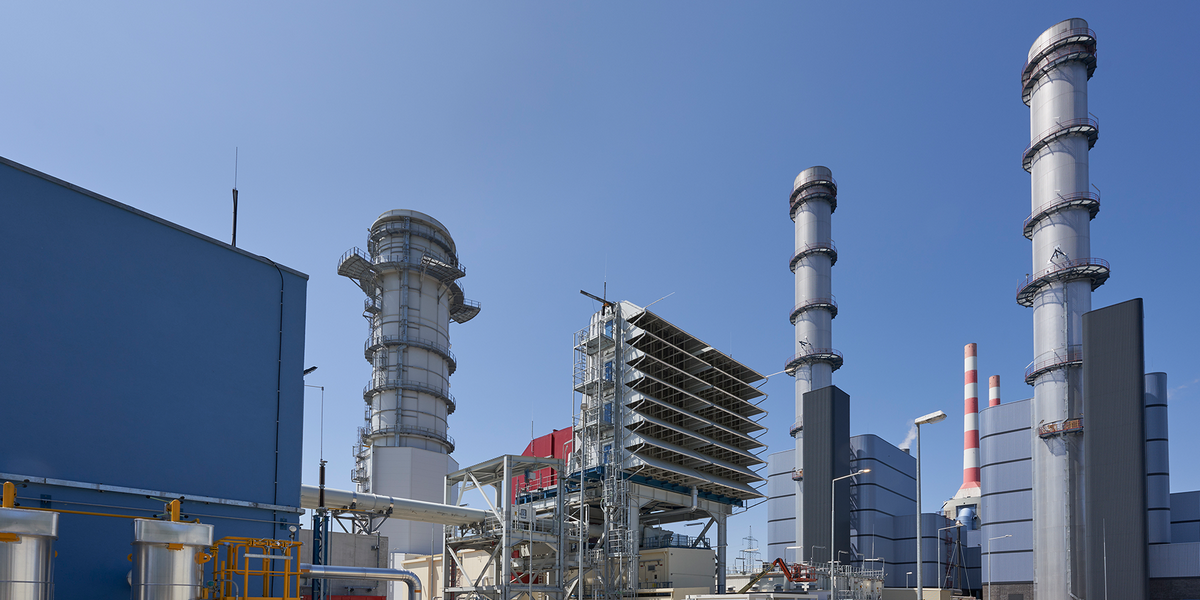
The mechanism potentially creates long-duration capacity revenues for eligible storage and demand-response projects alongside dispatchable generation.
“Energy security is becoming a contractual infrastructure market: reliability acquires investment value when policy establishes a mechanism to pay for it.”
For private infrastructure capital, the distinction between merchant electricity revenues and contracted capacity payments is fundamental.
Capacity mechanisms can improve revenue predictability, although eligibility requirements, performance obligations and project execution remain decisive. Germany’s framework therefore illustrates how European energy policy is translating reliability objectives into more explicit commercial structures.
The wider September edition on the platform also examines changes to UK battery connection rules, Belgian offshore-grid financing and US power-sector carbon regulation.
#2 Food & Agriculture: Public Finance Moves Toward Productive Infrastructure
United States — Agricultural Support Reinforces Producer Liquidity
US agricultural policy is prioritizing farm financial stability as food systems face commodity volatility and pressure on production economics.
The US Department of Agriculture announced more than 30 million additional base acres under the Agriculture Risk Coverage and Price Loss Coverage programs, marking the first expansion in two decades.
The broader safety net may support farm liquidity and preserve purchasing capacity for inputs, equipment and productivity-enhancing technologies.

For agricultural technology providers, the relevant policy signal is not simply the availability of public support. It is the extent to which producer-level financial stability sustains demand for commercially viable solutions.
Canada — Agricultural Infrastructure Gains a Dedicated Financing Channel
Canada is addressing a different constraint: access to capital for agricultural processing and infrastructure.
The Government of Canada announced Farm Credit Canada’s C$1 billion Agri-Food Project Finance Fund, alongside a C$150 million commitment to Velocity Agri-Capital Partners.
“Canada’s C$1 billion initiative targets agricultural infrastructure projects that sit between venture funding and conventional bank credit.”
The initiative establishes a potential financing pathway for capital-intensive processing and supply-chain projects that may struggle to attract conventional growth equity or bank financing.
“Food sovereignty is becoming an infrastructure-financing question, not merely an agricultural production objective.”
This distinction matters because agricultural resilience increasingly depends on assets beyond the farm gate: processing capacity, storage, logistics and reliable access to production inputs.
Public project-finance mechanisms can help address these requirements while creating more structured opportunities for private-sector participation. They do not, however, remove the need for commercially credible demand and disciplined project execution.
The full September analysis also examines European agricultural innovation policy, UK research funding and livestock biosecurity measures.
#3 Built Environment & Transport: Procurement Becomes Industrial Strategy
United States — Infrastructure Funding Faces Greater Uncertainty
US transport infrastructure faces a more uncertain federal funding environment as appropriations and program continuity become increasingly consequential.
The September funding extension, reported by the National Association of Counties, continued surface transport programs through December 11, 2026, while omitting certain advance appropriations associated with the Infrastructure Investment and Jobs Act.

The reported reduction of more than 15% in affected funding increases uncertainty for passenger rail, bridge and road-safety programs.
For infrastructure developers and financing partners, the distinction between program authorization and committed funding becomes critical. Projects reliant on future federal disbursements face different delivery risks from those supported by secured financing.
Europe — Public Procurement Reinforces Industrial Sovereignty
European transport policy is increasingly connecting infrastructure procurement with domestic manufacturing and supply-chain competitiveness.
The European Commission’s proposed procurement reforms would allow public buyers to apply European-preference criteria and give greater weight to quality rather than price alone.
Electric buses, charging infrastructure and municipal vehicle procurement could consequently face different competitive conditions.
The proposed framework remains distinct from an enacted mandate. Nevertheless, it illustrates how procurement policy can influence supplier positioning before individual infrastructure contracts are awarded.
“Public procurement is becoming an instrument of industrial sovereignty, changing competitive advantage before infrastructure contracts are signed.”
For private capital, this creates a different form of policy exposure.
Supplier eligibility, regional manufacturing capacity and procurement requirements may become more relevant to revenue visibility. At the same time, the commercial impact will depend on final legislation, implementation and the purchasing decisions of individual public authorities.
The September edition on the platform examines these developments alongside UK charging reforms, Canadian housing finance and changing vehicle-efficiency regulations.
#4 Industry: Commercial Demand Becomes the Test of Decarbonization
United States — Regulatory Retrenchment Changes Carbon-Management Economics
US industrial decarbonization faces a more selective policy environment as federal carbon requirements weaken.
The US Environmental Protection Agency finalized the repeal of 2024 power-plant carbon standards in September, with the rule scheduled to take effect on November 16, 2026.
The decision removes a regulatory demand driver for carbon capture in electricity generation and changes the assumptions underpinning certain carbon-management projects.
Its relevance to wider industrial decarbonization is indirect but important: demand created primarily through regulation carries different risks from demand supported by commercial contracts.
Europe — Industrial Competitiveness Remains Linked to Decarbonization
European industrial policy continues to connect decarbonization with supply-chain resilience, domestic production and strategic autonomy.
The September edition on the platform identifies shared carbon-storage infrastructure, industrial heat, automation and circular manufacturing as categories where public frameworks interact with private financing and commercial deployment.
These markets remain heterogeneous. Their financing characteristics depend on technology maturity, integration requirements, customer commitments and the durability of supporting policy.
“Industrial decarbonization becomes infrastructure-grade when its revenue case can survive beyond the policy instrument that helped create it.”
The practical distinction is between technologies that depend on continued discretionary support and projects capable of demonstrating contracted demand or measurable operating benefits.
For institutional investors, this requires separating regulatory exposure from technological and commercial risk rather than treating industrial decarbonization as a single asset category.
The complete analysis on the platform develops the industrial assessment through sector developments, financing activity and emerging technology deployment.
What This Signals for Capital Allocation
Pattern #1: Policy-Driven Jurisdiction Selection
Policy durability is becoming a defining variable in cross-border industrial infrastructure analysis.
European capacity frameworks, Canadian agricultural project finance and changing US federal support illustrate why geographic diversification must account for the underlying policy mechanism, not simply the sector or country.
For the Resilience and Sovereignty pillars, the relevant distinction is between political objectives and financing arrangements that can withstand changes in government priorities.
Pattern #2: Compliance and Procurement as Demand Creation
Regulation increasingly determines which industrial assets have access to customers and under what commercial conditions.
European procurement proposals may alter supplier competitiveness, while US regulatory repeal demonstrates how compliance-driven demand can weaken.
These contrasting developments reinforce the need to distinguish legally established obligations, proposed frameworks and commercially contracted demand.
Pattern #3: Reliability Transitions Toward Contractual Infrastructure
Energy reliability is moving from a broad policy objective toward explicit procurement and capacity-payment mechanisms.
Germany’s capacity framework and the financing of US nuclear restarts illustrate different pathways toward greater revenue visibility.
The wider implication extends to Decarbonization and Adaptation: infrastructure becomes more financeable when its contribution to system resilience can be translated into credible payment structures.
“The critical distinction in industrial private markets is between assets supported by policy and assets whose revenues are secured through policy-enabled contracts.”
Together, these patterns suggest that public policy should be assessed as part of the underlying commercial architecture of an industrial asset.
Subsidies, procurement preferences and regulatory mandates can improve investment conditions. Their value ultimately depends on whether they translate into durable demand, credible counterparties and executable projects.
Key Takeaways for CIOs and Family Office Principals
1. US regulatory retrenchment changes the underwriting basis for selected carbon-management assets. Projects dependent on compliance-driven demand face different risks from those supported by enforceable commercial agreements.
2. Germany’s capacity mechanism strengthens the contractual framework for electricity reliability. Long-duration capacity payments may improve revenue visibility for eligible generation, storage and flexibility projects.
3. Canadian agricultural project finance reinforces the infrastructure dimension of food security. Dedicated financing channels can help address capital gaps in processing and supply-chain capacity.
4. European procurement reform connects industrial sovereignty with market access. Supplier origin, procurement eligibility and regional production capacity may increasingly influence competitive positioning.
5. Geographic policy divergence requires more granular infrastructure analysis. Regulatory durability, contracted revenues and execution risk matter more than broad assumptions about national support for decarbonization.
This Is Only the Policy Layer
The developments presented here represent a selected portion of the policy intelligence tracked across four sectors in CCP’s September 2026 edition of the Market Intelligence Platform.
The complete analysis on the platform extends beyond government decisions to examine how policy interacts with capital flows, commercial deployment and structural market developments.
Four additional intelligence layers provide that context:
Sector Dynamics: Hyperscaler electricity procurement, agricultural supply-chain restructuring, autonomous fleet deployment and shared industrial carbon infrastructure.
Notable Transactions: Mazama Energy’s $135 million financing, ProducePay’s $140 million-plus funding package, construction-technology financing activity and industrial infrastructure capital developments.
Startup and Technology Pipeline: Branch Energy’s distributed storage platform, Carbon Robotics’ commercial expansion, emerging construction technologies and industrial process innovation.
Market Momentum and Early Signals: US electricity-demand forecasts, agricultural commodity volatility, European electric-vehicle adoption and changing financing conditions for capital-intensive projects.
“Policy reveals where governments intend capital to move. Transactions, procurement and execution reveal where industrial markets are actually becoming financeable.”
The distinction between policy ambition and commercial evidence is central to evaluating critical industrial investment.
CCP’s full September analysis brings these dimensions together across Energy, Food & Agriculture, Built Environment & Transport, and Industry, identifying how the four strategic pillars interact with changing market conditions.